
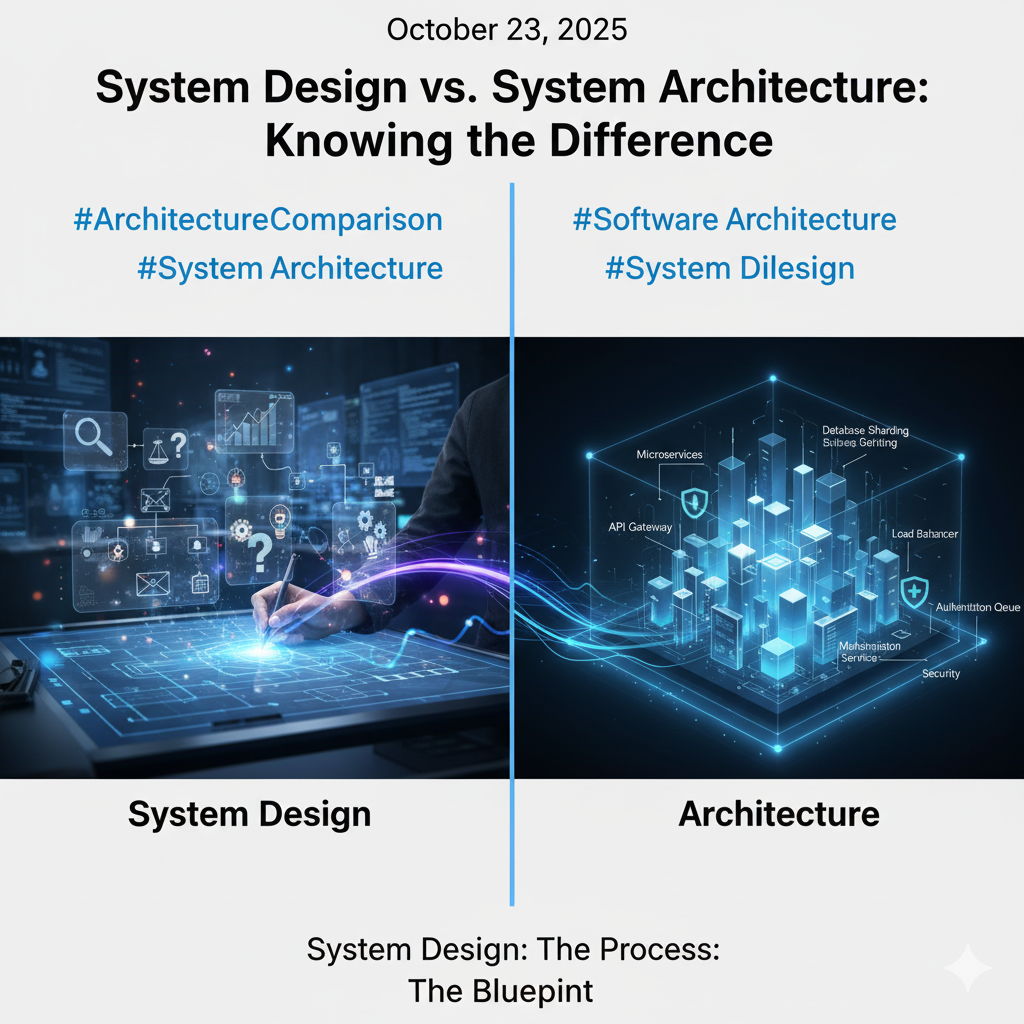
In the world of software engineering, the terms “system design” and “system architecture” are often used interchangeably. However, understanding the distinction between these two concepts is crucial for building effective, maintainable software systems.
The Fundamental Distinction
While closely related, system design and system architecture serve different purposes in the software development lifecycle:
System Design is the process of creating a solution. It’s the active work of defining how different components will work together to meet specific requirements. Think of it as the journey—the problem-solving, decision-making, and planning phase.
System Architecture is the result of that process. It’s the blueprint, the documented structure that describes how the system is organized, how components interact, and what technologies are used. Think of it as the destination—the artifact that guides implementation.
System Design: The Process
System design involves:
Problem Analysis
- Understanding functional and non-functional requirements
- Identifying constraints (budget, time, technology stack)
- Analyzing user needs and usage patterns
- Determining success metrics
Solution Planning
- Choosing appropriate design patterns
- Deciding on data flow and storage strategies
- Planning for scalability and performance
- Considering security and compliance needs
Trade-off Evaluation
- Balancing consistency vs. availability
- Weighing cost vs. performance
- Assessing simplicity vs. flexibility
- Evaluating build vs. buy decisions
System Architecture: The Blueprint
System architecture includes:
Structural Components
- High-level component diagrams
- Service boundaries and interfaces
- Data models and schemas
- Technology stack specifications
Interaction Patterns
- Communication protocols (REST, gRPC, message queues)
- Data flow between components
- Authentication and authorization flows
- Error handling strategies
Quality Attributes
- Performance characteristics
- Scalability mechanisms
- Security measures
- Reliability and fault tolerance
When Do You Need Each?
Use System Design when:
- Starting a new project from scratch
- Solving a specific technical challenge
- Preparing for technical interviews
- Evaluating different solution approaches
Reference System Architecture when:
- Onboarding new team members
- Planning feature implementations
- Debugging system-wide issues
- Making infrastructure decisions
- Conducting architecture reviews
Real-World Example
Imagine building a ride-sharing platform like Uber:
System Design Phase:
- How will we match drivers with riders efficiently?
- What database technology handles real-time location updates?
- How do we ensure the system scales during peak hours?
- What happens if the payment service goes down?
System Architecture Result:
- Microservices architecture with separate services for user management, ride matching, payments, and notifications
- PostgreSQL for transactional data, Redis for caching, Kafka for event streaming
- Load balancers and auto-scaling groups for horizontal scaling
- Circuit breakers and retry mechanisms for fault tolerance
Key Takeaways
- System design is the verb; system architecture is the noun
- Design is iterative; architecture evolves as the system grows
- Both are essential for successful software projects
- Good design produces clear architecture; good architecture guides implementation
- They complement each other rather than compete
Conclusion
Understanding the difference between system design and system architecture helps teams communicate more effectively, make better technical decisions, and build more robust systems. While system design is the creative process of problem-solving, system architecture is the structured documentation that ensures everyone understands how the system works.
Next time you’re in a technical discussion, consider whether you’re talking about the design process or the architectural outcome—it might just clarify a lot of confusion!